Human error remains one of the most costly and persistent challenges for businesses of all sizes. From data entry mistakes and scheduling miscommunication to financial inaccuracies and workflow delays, these errors can lead to revenue loss, compliance issues, customer dissatisfaction, and operational inefficiencies. As organizations seek more reliable ways to improve accuracy, AI automation has emerged as a powerful solution for minimizing human error across everyday business processes.
Why Human Error Happens in Traditional Workflows
Even the most skilled employees are susceptible to errors caused by fatigue, workload stress, multitasking, or repetitive manual tasks. Common causes include:
-
Handling large volumes of information
-
Performing repetitive, low-value tasks
-
Switching between multiple software systems
-
Miscommunication or inconsistent processes
-
Manual data transfer between platforms
These challenges become especially visible in SMEs where teams often juggle several responsibilities simultaneously. This is where automation and AI provide measurable benefits.
AI automation eliminates repetitive manual tasks
The simplest and most effective way to reduce human error is by reducing manual work altogether. Through process automation and workflow automation, AI systems can:
-
Automatically enter, classify, and validate data
-
Send notifications or reminders at precise times
-
Route tasks to the correct team member
-
Standardize outputs and remove interpretation mistakes
AI-driven ai in automation tools work consistently, without exhaustion or lapses in attention. This helps SMEs avoid costly inconsistencies across finance, HR, customer service, and operations departments.
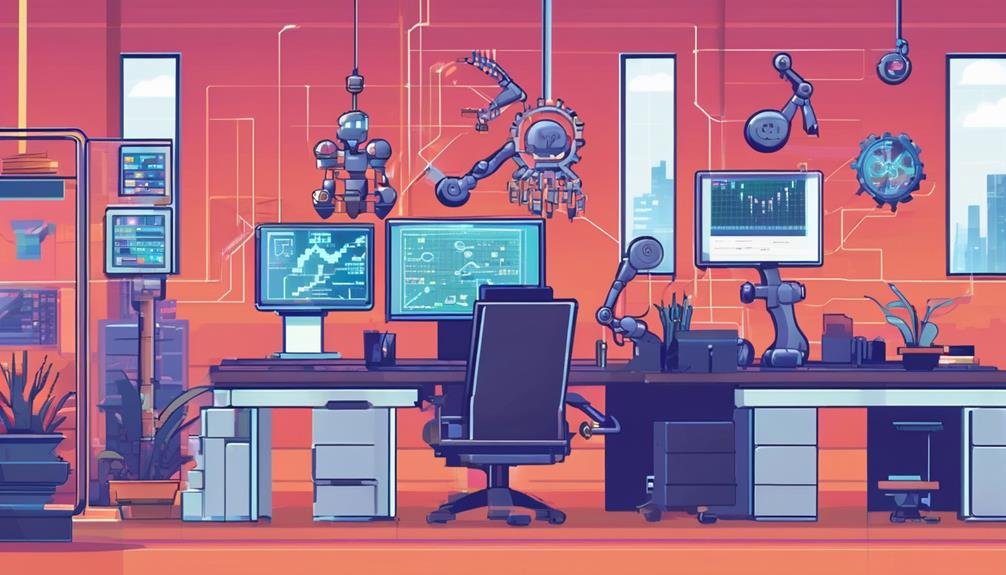
AI workflow automation ensures consistent, repeatable processes
Variation in how tasks are completed is a major source of errors. By enforcing standardized steps and automated decision rules, AI workflow automation reduces miscommunication and prevents employees from skipping or incorrectly completing tasks.
Real-world examples include:
-
Approval workflows that automatically flag missing information
-
Customer onboarding sequences that ensure all required data is collected
-
Ticketing workflows that correctly categorize and route support requests
Using AI automation tools, SMEs gain predictable, reliable outcomes regardless of team size or staff changes.
AI technologies provide built-in validation and anomaly detection
AI systems excel at accuracy checks because they can analyze large datasets faster and more consistently than humans. Using machine learning, AI technologies validate entries, detect inconsistencies, and identify potential risks such as:
-
Duplicate customer records
-
Incorrect invoice numbers
-
Suspicious financial transactions
-
Out-of-range inventory levels
For operations teams using ai for operations, AI can instantly highlight abnormal patterns, allowing early intervention and preventing errors from escalating into bigger issues.

AI improves accuracy in event and project management
In industries relying on coordination—such as events, education, or association management—AI significantly reduces scheduling conflicts, resource misallocation, and oversight.
For example, event management software powered by AI can:
-
Automate event registration data
-
Prevent duplicate sign-ups
-
Track attendance with near-perfect accuracy
-
Sync event changes across multiple platforms
-
Predict attendance trends
This level of automation ensures smooth execution and dramatically reduces human oversight errors.
AI automation tools outperform manual software-and-service workflows
Traditional software and services require constant human intervention across multiple steps. But with modern AI automation tools, businesses can streamline:
-
Invoice reconciliation
-
Scheduling and resource planning
-
Data migration
-
Reporting and analytics
-
Compliance monitoring
Many SMEs are now comparing ai automation tools to select the best systems for their workflows. These tools offer built-in safeguards that reduce incorrect inputs and prevent human error before it occurs.

Cloud-based AI reduces infrastructure mistakes
With SMEs increasingly moving operations online, cloud inaccuracies—such as misconfigured systems or outdated versions—can cause big problems. AI-enabled cloud migration services automate system checks, version management, and configuration validation, ensuring smooth transitions without the human errors typically seen in manual migrations.
AI supports long-term accuracy through continuous learning
Unlike traditional automation, AI systems learn from data patterns. This means their ability to reduce errors improves over time. Key benefits include:
-
Better predictive accuracy
-
Continuous workflow optimization
-
Improved decision-making consistency
-
Automatic updates to error-prevention rules
Organizations implementing AI transformation report fewer process breakdowns and stronger operational reliability year after year.
Conclusion
AI automation is one of the most effective and scalable ways to reduce human error across business operations. By automating routine processes, validating data, standardizing workflows, and enhancing real-time decision-making, AI empowers SMEs to operate with greater accuracy and confidence.
Whether improving event management, optimizing operations, or modernizing cloud infrastructure, automation and AI give businesses the tools to build error-resistant, efficient systems that grow stronger over time.