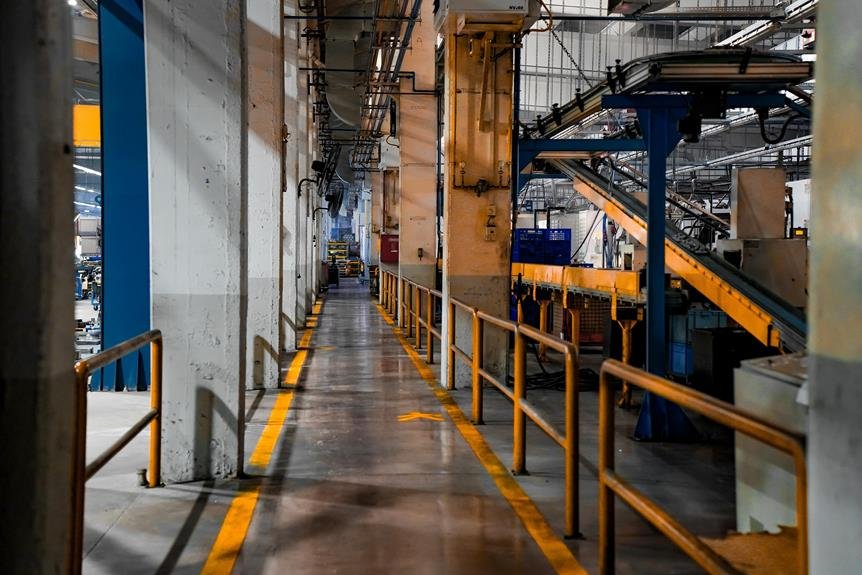
AI in automation isn’t just a buzzword; it’s an essential component of modern industry transformation. By incorporating artificial intelligence, businesses streamline operations and reduce human error, ultimately fostering a more efficient workplace. This technological advancement isn’t limited to one sector—it’s reshaping everything from manufacturing to agriculture. By optimizing workflows and analyzing data with unparalleled precision, AI-driven automation allows companies to remain competitive in a rapidly changing landscape. But what happens when AI takes center stage in areas like healthcare and customer service? The implications for both industries and consumers are profound.
Transforming Industrial Processes
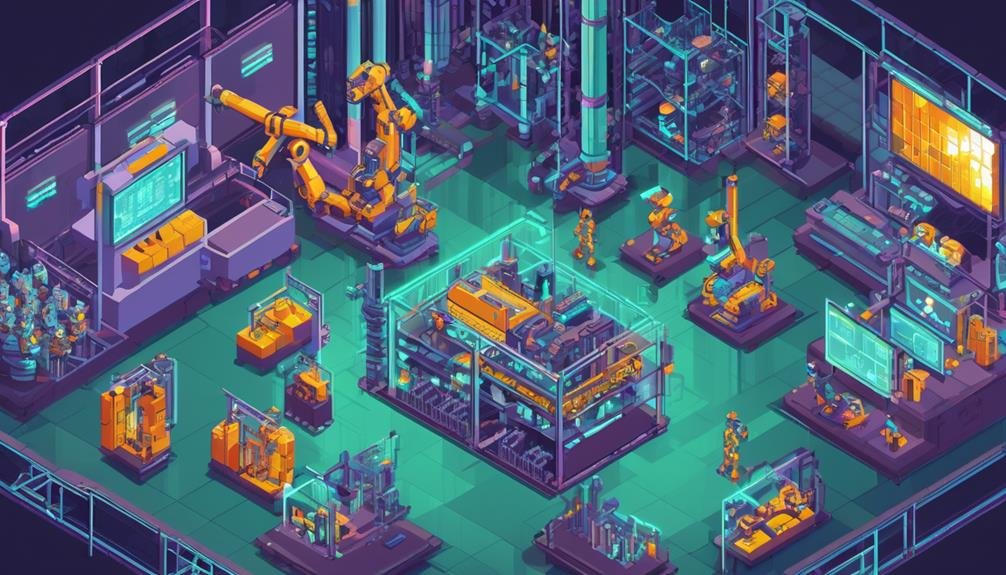
Revolutionizing industrial processes, AI enhances efficiency and precision in manufacturing and production. In today’s fast-paced industrial landscape, businesses constantly seek ways to increase productivity and streamline operations. AI, with its capability to analyze vast amounts of data and predict outcomes, stands at the forefront of this evolution. It empowers industries by optimizing production lines, reducing waste, and minimizing downtime. AI-driven machines and systems can quickly adapt to new tasks, allowing for smooth shifts and uninterrupted workflows.
AI’s role in increasing productivity is undeniable. By automating repetitive tasks, it frees up human workers to focus on more intricate and strategic activities. This not only speeds up production but also reduces errors, leading to higher quality products. For instance, AI systems can inspect products at incredible speeds and detect defects that might be overlooked by the human eye. This guarantees that only the best products reach the market, enhancing brand reputation and customer satisfaction.
Furthermore, AI’s ability to streamline operations is transformative. Predictive maintenance, powered by AI algorithms, can anticipate equipment failures before they occur, allowing for timely interventions. This reduces costly downtime and extends machinery lifespan, saving companies significant expenses. Additionally, AI helps in optimizing supply chains by predicting demand and managing inventory levels more efficiently. This guarantees that resources are utilized effectively, reducing waste and improving overall efficiency.
In essence, AI is not just a tool but a catalyst for change in industrial processes. By increasing productivity and streamlining operations, it paves the way for a more efficient and innovative future in manufacturing and production.
Enhancing Customer Experience
AI’s influence extends beyond industrial processes, playing a pivotal role in enhancing customer experience by personalizing interactions and anticipating needs. Businesses are increasingly utilizing AI to tailor their services to individual preferences, guaranteeing that customers feel understood and valued. Through machine learning algorithms, AI analyzes customer data to predict future behaviors and preferences, leading to more personalized interactions. This tailoring makes customers’ experiences more enjoyable and efficient, as they receive recommendations and services that closely align with their interests and needs.
Efficiency is another key area where AI profoundly impacts customer experience. Automated systems powered by AI streamline operations, reducing wait times and enhancing service delivery. For instance, AI-driven chatbots provide immediate support to customers, addressing inquiries and resolving issues without delay. These chatbots aren’t just scripted responders; they’re capable of understanding context and nuance, which allows them to offer solutions that are more accurate and relevant. By improving efficiency, AI not only optimizes the customer journey but also empowers businesses to allocate resources more effectively.
Moreover, AI’s capability to process and analyze vast amounts of data in real time allows businesses to gain insights into customer satisfaction and areas needing improvement. Feedback loops powered by AI guarantee that companies can swiftly adapt to changing customer expectations. This adaptability fosters a dynamic relationship between the company and its customers, promoting loyalty and long-term engagement. Essentially, AI transforms customer experience from a one-size-fits-all approach to a more nuanced, efficient, and personal interaction, benefiting both businesses and their clientele.
Revolutionizing Healthcare

Artificial intelligence is transforming healthcare by improving diagnostic accuracy and streamlining patient care processes. One significant advancement is AI’s role in remote monitoring. By utilizing wearable devices and smart sensors, healthcare providers can now track patients’ essential signs, detect anomalies, and predict potential health issues before they become critical. This capability not only enhances patient safety but also reduces the need for frequent hospital visits, making healthcare more accessible and efficient.
AI is also paving the way for personalized medicine, which tailors treatment plans to individual genetic profiles and specific health conditions. Through advanced algorithms and large-scale data analysis, AI systems can identify patterns and predict how patients will respond to various treatments. This level of personalization ensures that patients receive the most effective therapies, minimizing side effects and improving outcomes. For instance, AI can analyze a cancer patient’s genome to recommend targeted therapies that are more likely to succeed than traditional approaches.
Moreover, AI aids healthcare professionals by automating routine tasks, allowing them to focus on more complex decision-making processes. With AI’s assistance, clinicians can quickly analyze medical images, such as X-rays and MRIs, leading to faster and more accurate diagnoses. This not only enhances the quality of care but also alleviates the burden on overworked medical staff.
Advancing Agricultural Practices
Farmers are leveraging AI technologies to enhance crop yields and optimize resource management. By adopting precision farming techniques, they’re able to monitor and manage crops with unparalleled accuracy. Precision farming utilizes AI-driven tools to analyze data from various sources like satellite imagery, soil sensors, and weather forecasts. This allows farmers to make informed decisions on planting, fertilizing, and harvesting, ultimately improving productivity and reducing waste.
Smart irrigation is another crucial advancement in agricultural practices. By employing AI, smart irrigation systems can determine the precise water needs of crops. These systems analyze factors such as soil moisture levels, weather conditions, and crop type to deliver the exact amount of water required. This not only conserves water but also ensures that crops receive the ideal hydration for maximum growth. Farmers using such technology report increased efficiency and sustainability, as they effectively manage water resources, which are often scarce and costly.
AI’s role extends beyond just data analysis. It also encompasses automated machinery and drones that can perform tasks like planting seeds, applying fertilizers, and monitoring crop health. These AI-powered devices reduce the need for manual labor and allow for operations that are both time-sensitive and precise.
Boosting Economic Efficiency

By integrating AI into various sectors, businesses can streamline operations, reduce costs, and enhance productivity. AI technologies, such as machine learning and data analytics, allow companies to analyze vast amounts of data quickly and accurately. This capability enables firms to identify inefficiencies, predict market trends, and make informed decisions that drive growth. For instance, AI-driven automation can optimize supply chain management by predicting demand fluctuations, thus diminishing inventory costs and minimizing waste.
In manufacturing, AI-powered robotics and automation systems can perform routine tasks with precision and speed, significantly heightening productivity. These systems operate around the clock, ensuring continuous production and minimizing downtime. As a result, businesses can meet market demands more efficiently without the added expense of overtime pay or human error-related losses.
Moreover, AI can enhance customer service by deploying chatbots and virtual assistants that handle inquiries swiftly and accurately. This not only improves customer satisfaction but also allows human employees to focus on more intricate tasks, optimizing resource allocation. By reducing costs associated with workforce management, companies can reinvest savings into innovation and expansion.
AI’s role in financial services is equally transformative. Algorithms can assess credit risks, detect fraudulent activities, and automate compliance processes, thereby reducing operational costs and enhancing decision-making accuracy. These advancements lead to more competitive pricing and better customer experiences, driving economic growth.
In essence, AI’s integration into business operations serves as a catalyst for boosting economic efficiency. By increasing productivity and reducing costs, companies can achieve sustainable growth and maintain a competitive edge in an ever-evolving market.