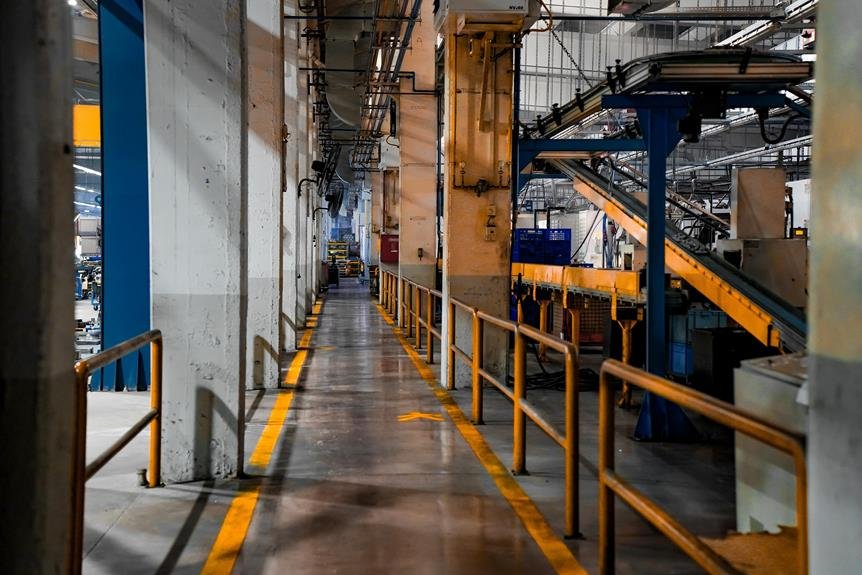
As SMEs explore ways to modernize their operations, one of the most common questions is: What’s the real difference between traditional automation and AI automation?
Both approaches reduce manual effort, but the way they work—and the value they deliver—are fundamentally different. Understanding these differences helps small businesses choose the right approach for cost reduction, scalability, and long-term efficiency.
What Is Traditional Automation?
Traditional automation relies on fixed, rule-based workflows. A system performs a task only when conditions match predefined logic. For example:
-
If an invoice is received → move it to a folder
-
If stock drops below a threshold → send an alert
-
If a customer submits a form → create a ticket
This form of process automation is dependable and predictable. It works best when tasks are repetitive and unchanging.
However, traditional automation has limitations:
-
It cannot handle exceptions well
-
It requires constant updates whenever the workflow changes
-
It struggles with unstructured data (emails, PDFs, documents)
-
It doesn’t learn or adapt over time
For SMEs with stable processes, traditional automation still plays an important role. But as workflows grow more complex, its rigidity becomes a bottleneck.
What Is AI Automation?
AI automation goes far beyond static rule-based workflows. It uses machine learning, natural language processing, and pattern recognition to understand information, make decisions, and improve accuracy over time.
Where traditional automation follows instructions, AI automation learns and adapts.
Examples include:
-
AI that reads invoices or receipts
-
Chatbots that understand customer intent
-
Systems that predict demand and reorder stock
-
Email classifiers that route messages automatically
-
Tools that analyze patterns to detect anomalies
This is where automation and AI merge—creating workflows that can interpret data, respond intelligently, and continuously refine performance.
AI systems can work with unstructured information such as text, images, or conversations, making them more suitable for real-world business scenarios.
Key Differences Between AI Automation and Traditional Automation
1. Decision-making
Traditional automation: follows exact rules.
AI automation: understands context and makes decisions based on patterns.
2. Adaptability
Traditional automation: rigid; breaks when inputs change.
AI automation: flexible; adjusts to new data and learns over time.
3. Complexity Handling
Traditional automation: ideal for simple, repetitive tasks.
AI automation: handles complex, multi-step workflows through AI workflow automation.
4. Cost Over Time
Traditional automation: lower upfront cost, higher long-term maintenance.
AI automation: higher initial investment, lower long-term cost due to fewer manual interventions.
5. Scalability
Traditional automation: scales slowly; each new rule must be created manually.
AI automation: scales effortlessly as the system improves and processes expand.
When Traditional Automation Still Works Best
Traditional workflow automation is useful when:
-
Tasks never change (daily data backups)
-
Conditions are black-and-white
-
No human interpretation is required
-
Stability is more important than flexibility
SMEs with simple operational processes may benefit from this predictable, low-risk approach.
When AI Automation Becomes Essential
AI becomes valuable when workflows involve:
-
Unstructured data (emails, documents, PDFs)
-
High customer interaction
-
Pattern recognition
-
Decision-making
-
Demand forecasting
-
Large volumes of data
This is why AI automation is widely used in:
-
Customer service
-
Inventory optimization
-
Finance and accounting
-
HR screening
-
Marketing and lead scoring
-
Fraud and anomaly detection
By using AI automation tools, SMEs can dramatically reduce manual work, eliminate errors, and improve overall efficiency.
Which Should SMEs Choose?
Most growing businesses benefit from a hybrid model:
-
Use traditional automation for fixed, rule-based tasks
-
Use AI automation to interpret, predict, and adapt
As SMEs expand, relying only on traditional automation becomes costly and inefficient. AI-based automation scales naturally and handles complexity without constant rewrites.
Conclusion
Traditional automation helps SMEs complete repetitive tasks efficiently, but it lacks flexibility. AI automation introduces intelligence, adaptability, and long-term cost advantages. With the combination of ai in automation, AI workflow automation, and smart decision-making models, businesses can achieve a higher level of operational excellence.
For SMEs aiming to reduce costs, improve accuracy, and future-proof their operations, adopting AI automation is not just beneficial—it’s becoming essential.